No one can account for their time on Earth quite like a player of videogames. It's hard not to, as software and hardware conspire together to tally up your time gaming and taunt you with it at every turn. Steam helpfully logs how many hours you've spent on a game right below the Play button, Nintendo Switch users can see their hour counts in their player profiles, and just about every platform will send you a year-end email tabulating how many days your combined hours of gaming add up to. No one — not my partner, not my employer, not my very anxious dog — keeps tabs on my time quite like the videogames I play.
Decades of this quantification has cultivated an unusual relationship between the player and time. Countless souls, intrigued by a game, will habitually check HowLongToBeat.com to see what a new game they're interested in might ask of them. It does not matter that, statistically, almost no players finish games. The ritual persists: a given videogame's estimated completion time is weighed against the player's feather of Anubis, and depending on some arcane calculus based on genre, cost, prestige, marketing, and prior commitments (both to other games as well as people), a game is deemed worthy in its demands or preposterous.
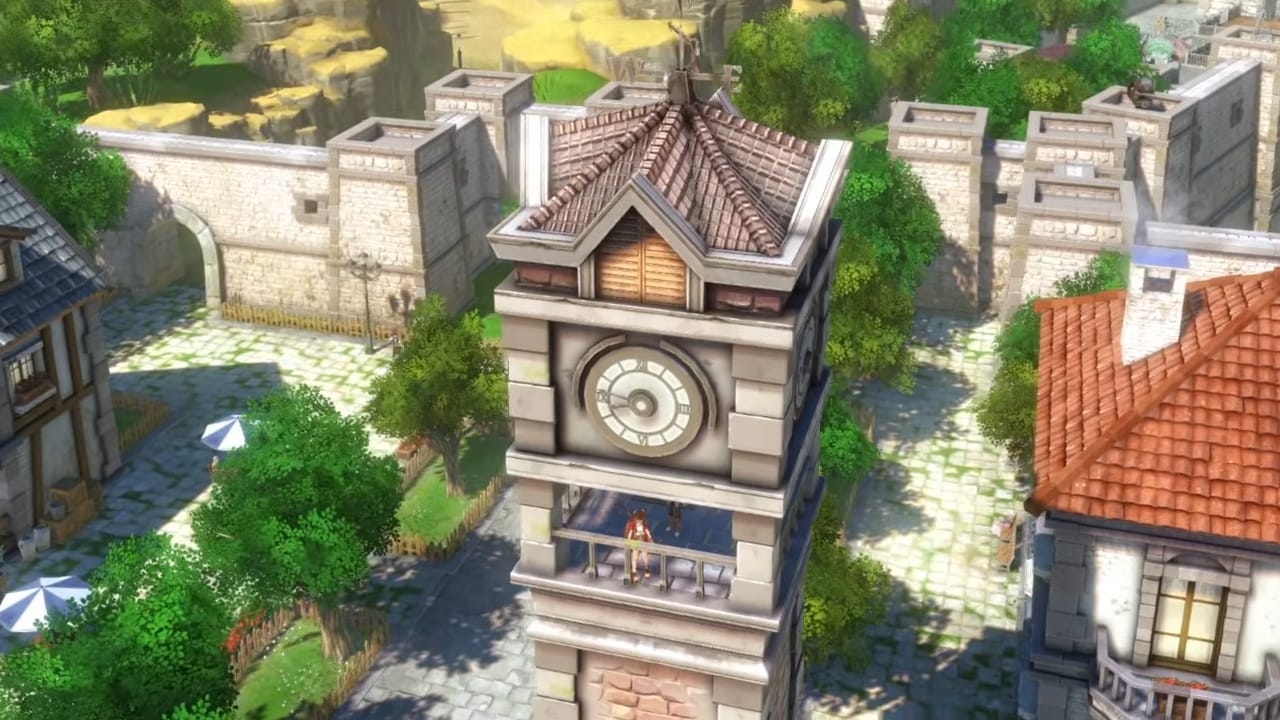
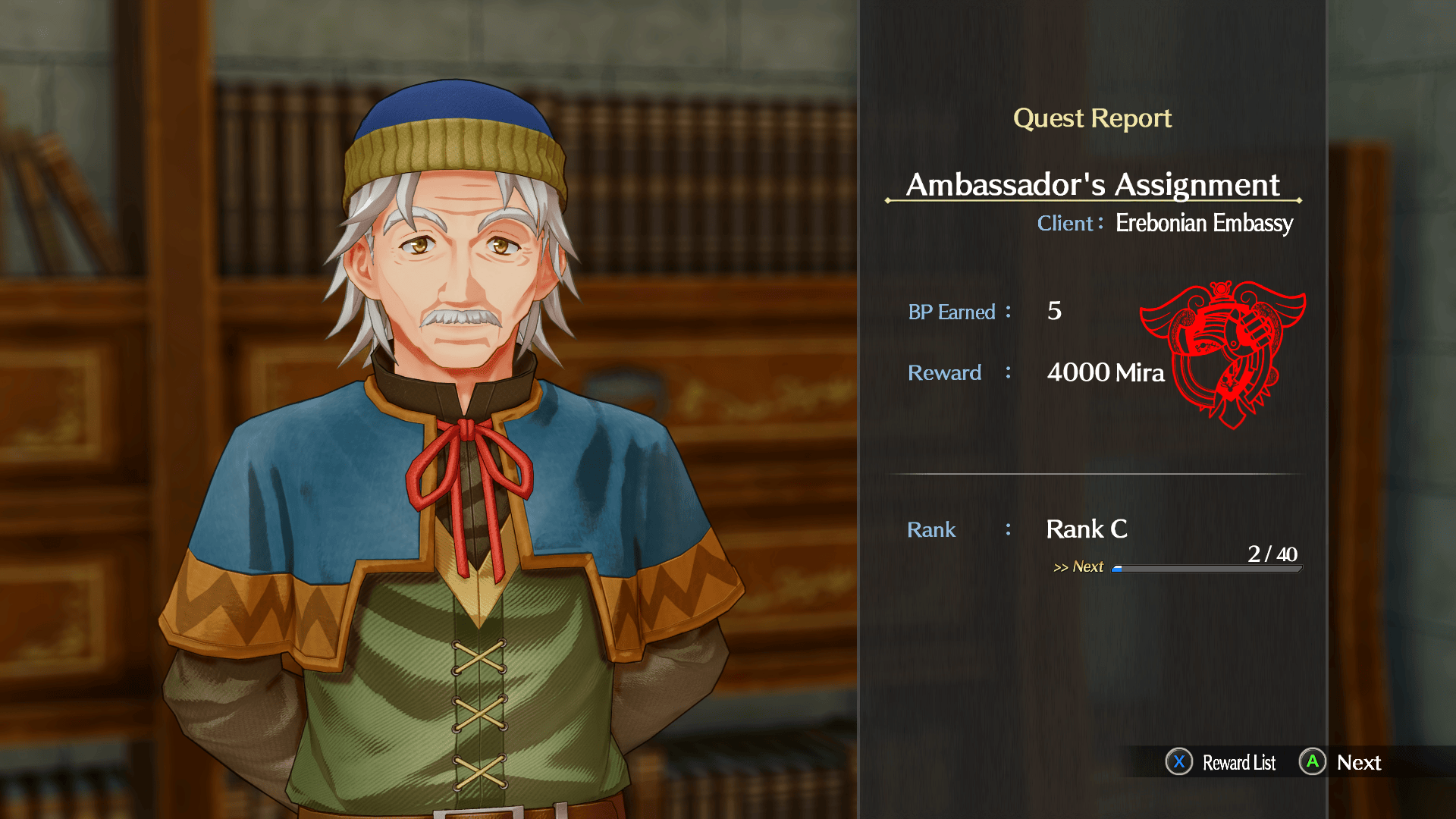
I find this behaviour absurd. Bonkers. Strange. A terrible relationship to have with an art form or leisure pursuit. I object because I have identified it in myself, and recoil in horror. How unfortunate that there are some games for which the first thing you hear about them is how long they are! Dragon Quest VII, for example, is "the one that's a hundred hours long," necessitating an abridged remake. Assassin's Creed games have a similar reputation, as if those not in the habit of playing them ought not to start unless they have some sort of lengthy medical leave planned. And then there are the truly outrageous feats like this month's Trails in the Sky 2nd Chapter, a remake of the second game in Falcom's 13-parts-and-counting soap opera, one of the most staggering time-sinks in the medium.
"Getting to the end of them is not the point of playing them"
Granted, it is not the worst idea to have an acute awareness of how one's time is spent, and a healthy respect for your own mortality. It is good and mature to know what sort of chicanery you might be getting into before you commit to it. But games are not commitments, and neither are books, television shows, concept albums, or Marvel movies. People make commitments to other people. Between a human being and an inanimate object, there is no such bond. You can always stop. It won't even hurt anyone's feelings.
So what does all this fretting over the time a game demands accomplish? We have already, presumably, decided that videogames are a worthwhile way to spend at least some of our time, yes? One of the terrible paradoxes about the human relationship to time is that, the more precise a culture is in its measurement of time, the more tyrannical its relationship with it is. Capitalism, for example, demands a constant accounting of hours. It is interesting then, that games start here, with this sort of relationship.
Consider Trails in the Sky. Should I think too much about those hours — not just the 60-odd hours I will likely spend in 2nd Chapter, but how many I might spend on the next dozen games, up through this year's Trails Beyond the Horizon — the decision to bother with this series as a busy adult who writes about games and other media is downright foolish. They're not even all that respectful of your time on a craft level: you could probably trim the whole saga by a dozen hours if you just cut all the footage of characters walking into, or leaving, a room. (Newer entries, hilariously, add a fast-forward button.) The entire first game is an almost unbearably slow prologue that fans insist is essential. I disagree and think it's fine to just skim the game either by sampling it yourself or watching someone else play so you can get to the second game where the plot actually starts.
I'm not normally this gracious. For a long time, I spurned these games, specifically. Yet I have all these questions I want to ask of them. I'm intrigued by their persistent interest in journalism as a vital organ of society. (Yes, every journalist is a narcissist seduced by their own reflection and, in only this way, I am not special.) I am delighted by their hyper-compressed depiction of a modernising world that goes from steampunk airships to cell phones and the internet in seven years' time. I like that they're a bit abrasive, indulging in anime tropes that toe the line of good taste, daring you to abandon it before you see even half of what's in store.
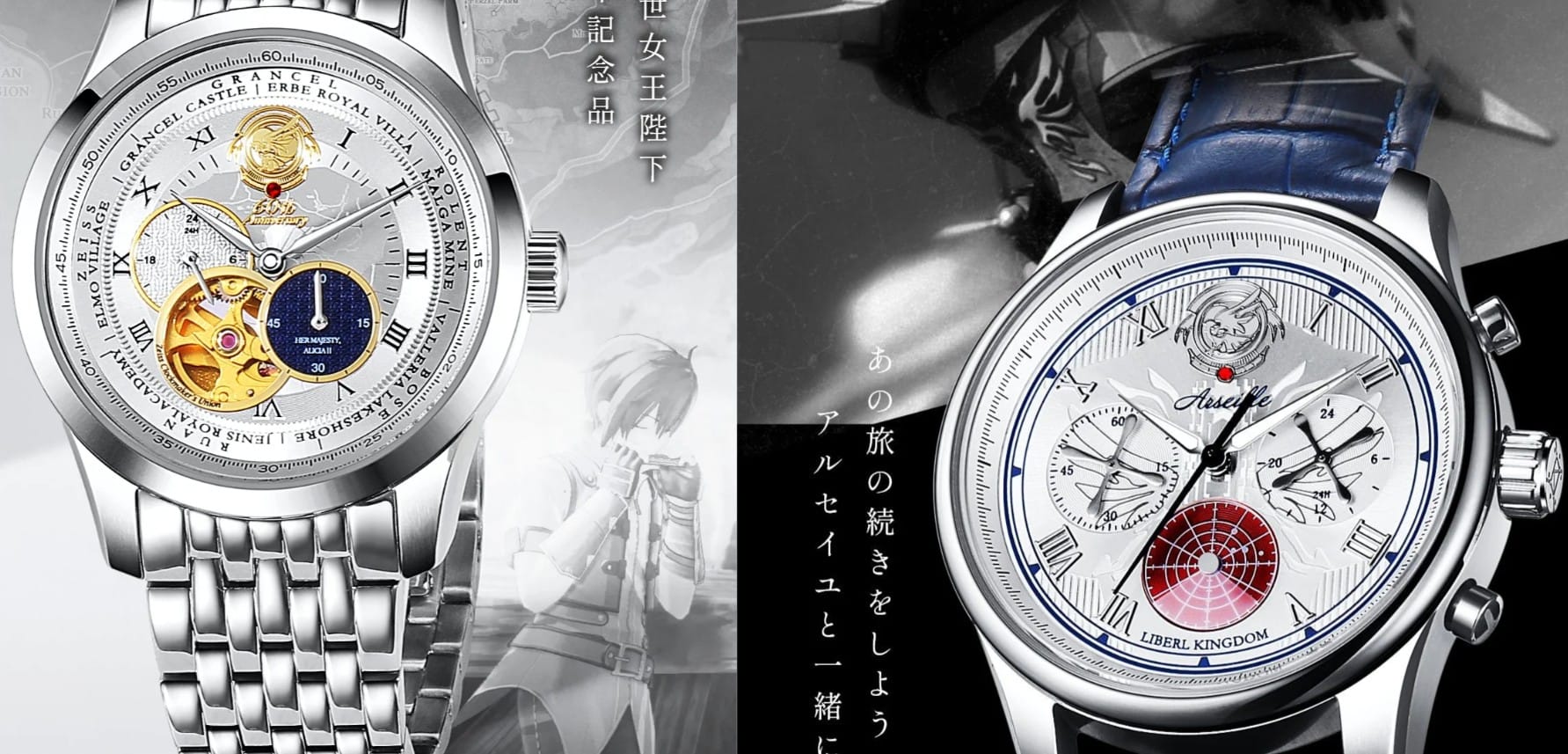
It's only too fitting that Trails merch includes a line of watches.
It isn't terribly likely that I will make it to the end of these Trails games, but getting to the end of them is not the point of playing them for me. I am curious, and I find indulging my curiosity rewarding. I think of games like places, and I enjoy whatever time I'm able to spend in them. I don't care if the hours I devote to Trails in the Sky 2nd Chapter amount to a significant portion of the game, or are even that good. I wanted to know, so I went. Perhaps I will get the chance to know more, some day. I refuse to count hours I've not yet spent.
There's a Tom Scocca essay about mortality I think about often. Scocca was 47 when he wrote it, and finds himself doing this constant string of generational math, contemplating how many 47 year-olds that were alive when he was born are still with us, and how every 47 year-old that was alive when his father was born is now dead. In doing this math, he notes that we're not as far from the previous century as we feel, that we are all not so much running out of time but spilling out of it, rushing in with our brief lives and ushering others out. "I keep sliding the numbers around, and as I do, they shove each other out of the way," Scocca writes. "The people don’t all fit."
I read those words and I feel foolish about the practice of counting all these hours, as if I know how many I have to draw from, or that I'm even wise enough to know how best to spend them. If I find that I've racked up 300 hours this year swearing at roguelikes and clicking through RPGs, what am I meant to do with that knowledge? I'm not telling anyone, for one. And one can't consider their hours too closely without wondering if they could've spent them better. Here is the truth: you can always spend them better.
There's no need to place the hobby on a hierarchy here, to pontificate on how time spent gaming could've been used to call a friend or help someone move or learn guitar. We can leave those judgments out of it, as hindsight is harsh enough even on frivolity. You could have spent the hours poured into an adequate game on finding your new favourite. Your life could be marginally nicer, had you made choices slightly different from the ones you made when you drank one and a half light beers and booted up Steam.
This is the heart of my ire for hour counts in videogames and the platforms that host them. I find their crude sums a measure of insecurity; another side of the coin that promises players a list of features justifying their purchase, as if there was a way to arrange the numbers and have them add up to some sort of fulfilment. I return to Scocca's essay: we can't balance the equation of our lives. There's no room for it. We are all caught up in the relentless rush of life, indistinguishable from one another in a roaring river of humanity. Wasting time, using it wisely, or staring off into the middle distance. I am lucky in that I can consider spending some of that time playing a ridiculous JRPG or six. Tomorrow I may decide to never play one again.
Perhaps you'd like to see some final judgment here, or find my zen approach performative or annoying. I suppose that's fair. It's tempting to hedge in a piece like this one, to not overextend in a way that might embarrass you down the road. So I will leave you with what I currently believe, having thought about this enough to produce all these words: the best ways to spend your time don't involve accounting for that time. But also: if your videogame takes six or fewer hours to finish, you should consider putting that in the title.
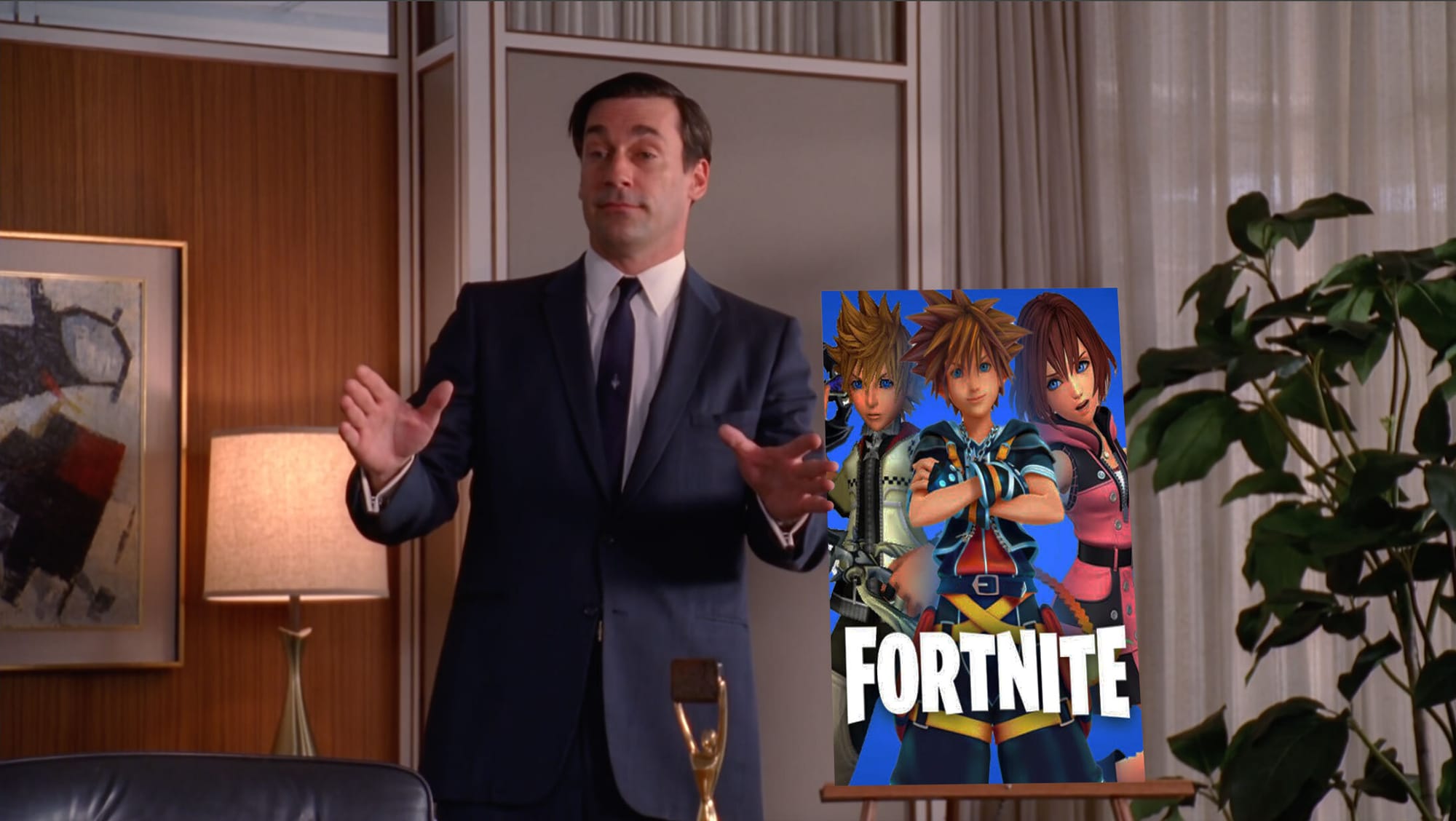
The all-consuming toy box that is Fortnite just saw the release of one of its more unexpected-but-nevertheless-hotly-anticipated collections of playthings in a long time. The Fortnite X Kingdom Hearts collaboration sees Sora, Riku, Kairi, Roxas, and a slew of songs, keyblades, and goodies (the gummi ship!) from the series joining the hyper-popular shooter.
Ever since Fortnite’s first major crossover event, a Marvel collaboration featuring an Infinity Gauntlet item that players could battle over and use to transform into Thanos, the free-to-play juggernaut has become, essentially, a playground where users are encouraged to show off their toys to one another. Cosmetics, skins, items, and even areas of the map are added to pay homage to, well, everything. This completes the game’s playground vibe, to say nothing of the thousands of user-generated maps and games on the platform. You can have David Beckham doing the Miku Miku Beam dance while he’s getting headshotted by Dr. Doofenshmirtz wearing Air Force 1s.
This clip perfectly encapsulates Fortnite
Roxas dropping in with Tails, Kills Ben 10 with the Kingdom Key, Pulls out the Mega Buster, then Spin Dashes, and kills Jax from the Amazing Digital Circus, who spills out Sonic Rings https://t.co/wzTvi74D9q
For some people who play and love Fortnite, this has more or less become the point of the game. The breadth of collaborations Epic is able to secure, from well-known to obscure, has changed the game from a battle royale shooter into a platform where the value proposition is, essentially, making Hank Hill do the “All I Want For Christmas is You” dance. I work in marketing and branding, so this shift has been particularly interesting to me because it is, from a branding perspective, fucked.
To say nothing of the fact that Hank Hill would never dance like Mariah Carey, Fortnite’s collaborations with kid-friendly properties like Spongebob Squarepants, Disney’s Hercules, Phineas and Ferb, Ben 10, Ed, Edd, and Eddy, Scooby-Doo, and countless more add another wrinkle to this branding problem. If you’re a fan of Ben 10, how do you feel about Ben Tennyson using an actual gun that shoots actual bullets? If you grew up with Spongebob, how do you feel about allowing Sandy Cheeks to beat an opponent to death with Plank?
There’s a clear dissonance here, and it’s only come further into focus with Fortnite’s “Override” event, a massive celebration of gaming writ large, with cameos and collaborations with Mega Man, Tetris, Pac-Man, and Kingdom Hearts. Right now, people on social media are having a field day shitposting about Kingdom Hearts 2’sKairi holding a shotgun. It’s funny, for sure, but if you’re a fan of the series, how do you square that image with the memories of the girl on your CRT offering Sora a paopu fruit? Or, as one X user put it, “what does this mean for the overall Kingdom Hearts lore when Roxas is dabbing on the organisation?”
what does this mean for the overall Kingdom Hearts lore when Roxas is dabbing on the organisation pic.twitter.com/lv4NBV9Cjs
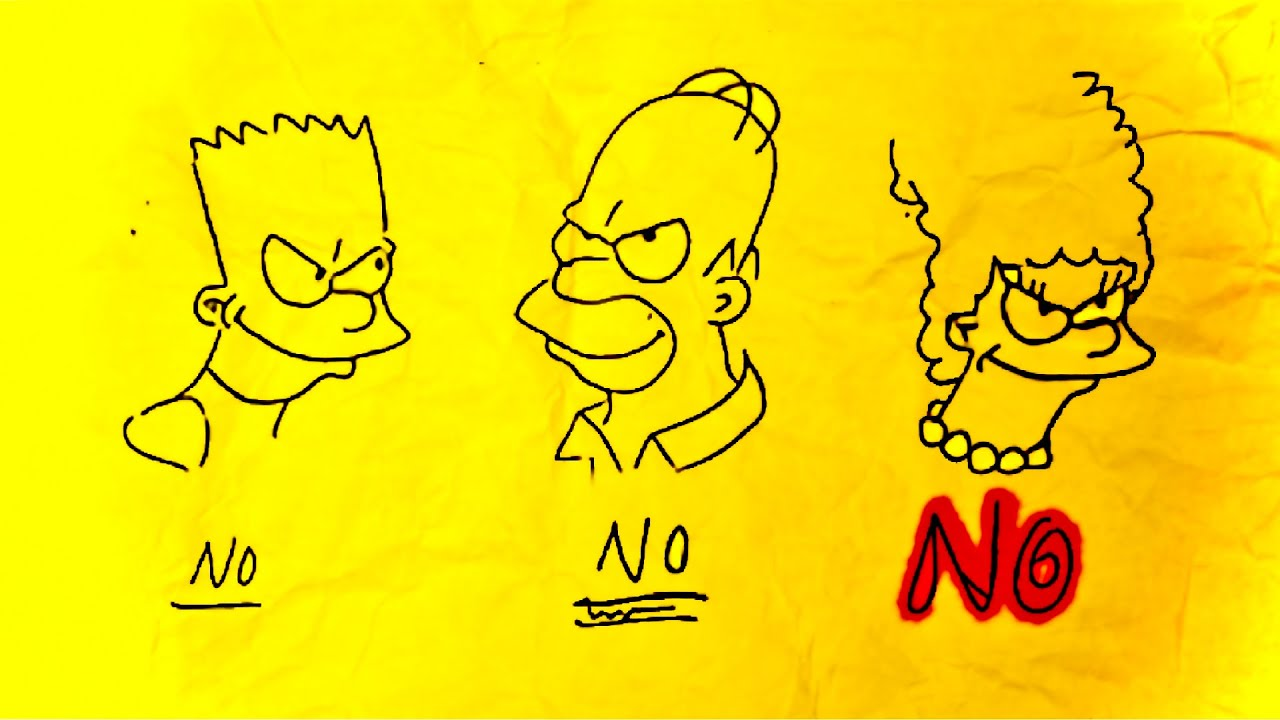
If you’re on YouTube regularly, the above image is likely familiar to you. It’s one of the famed “no-no sheets” from The Simpsons, essentially a style guide to help animators draw and write the characters consistently and in a way that is in line with their personalities. This guarantees that the characters always look and act the same even in times of staff turnover or changes in design from season to season. There are myriad rules for the Simpson family, and the video about this is a must-watch for anybody interested in the cement foundation upon which America’s most beloved animated family is built. If you haven’t seen it, the thesis of the video and of the sheets themselves is that it’s important to make sure these characters have consistent identities, because otherwise it’s hard for fans to connect with them.
I have been in the marketing, PR, and branding business for over 15 years. These rules are very relevant to me, and anybody else in the field, specifically because they are deeply intertwined with the rules and regulations I use to help brands build a consistent voice and identity. They’re as much character notes as they are marketing guidelines. And from the perspective of a marketer, they are often difficult to work around, as they severely limit what advertisers can do with characters.
While I’m using marketing-speak here, these rules can also be considered the pillars that make up any franchise’s “canon,” the intractable truths of the characters and the universes in which they reside. Anyone with an emotional attachment to media (so, presumably, you, if you’re an Aftermath subscriber) knows that stepping outside the canon necessarily makes characters feel less like themselves. And likewise, agency lifers know that, in much grosser words, breaking these rules ‘dilutes the IP.’ This is, at least in part, why Bill Watterson was so vehemently against licensing Calvin and Hobbes’ likenesses, saying to The Comics Journal’s Richard West in 1989, “The world of a comic strip is much more fragile than most people realize. Once you’ve given up its integrity, that’s it.”
Bart, Sonic, Mario, Sora, and Iron Man aren’t just characters. If we’re honest with ourselves, we should be able to admit that they never were. They are mascots, advertising icons, and brands unto themselves. But branding rules have changed a lot since the creation of those The Simpsons sheets. The simultaneous proliferation of AI, social media, and the massive success of unlikely brand collaborations have blurred the lines of how characters are portrayed, and how the characters’ brands portray themselves in turn.
The most galling example of this can be found in the 2025 version of the annual Coca-Cola holiday ad, a prestigious project for advertisers that not only gave us the iconic Coke Polar Bear mascots, but is also, arguably, responsible for our collective image of Santa Claus given the 1931 ads commissioned from Haddon Sundblom. For this reason, it is incredibly surprising that for the 2025 entry in this storied collection that branding freaks like me unfortunately care a lot about, Coca-Cola chose, for the second year in a row, to use generative AI. Beyond the moral issues with the technology, this is a nightmare for people who care about branding, as AI has trouble keeping visual elements consistent. Multiple times in the ad, as you can see in the image above, the Coke logo–arguably the most iconic, historic logo ever created–appears mangled and wrong.
This is the kind of thing people used to lose their jobs for, because in the world of branding and marketing, messing up like this risked making the brand less recognizable. If every other Coke logo you saw looked slightly different, how long would it take you to forget what the original looked like? Would you be able to instantly tell it apart from a competitor with similar branding? Would you continue to associate the logo, the brand, and the drink with that iconic polar bear, or would that bear in your head morph into an AI-generated monster?
I’ve previously written for Polygon about Nintendo’s effort to become a lifestyle brand. The branding effort there is to associate Nintendo with fun, healthful and fulfilling activities. It’s an easy way to make people smile when they think about what is, at the end of the day, a faceless and monolithic brand. If other faceless and monolithic brands don’t keep that iron grip on their characters and how they act, those positive associations will be muddied and lost—a nightmare for marketers, and a slap in the face of fans who want the companies that own these characters to be good stewards of them.
This is the marketing equivalent of ludonarrative dissonance, and it forms cracks in the kinds of memories great art can leave you with. Now, when I think about Kairi, I don’t just think about a moving coming-of-age story. It’s been cheapened by her inclusion in a game that doesn’t fit her character.
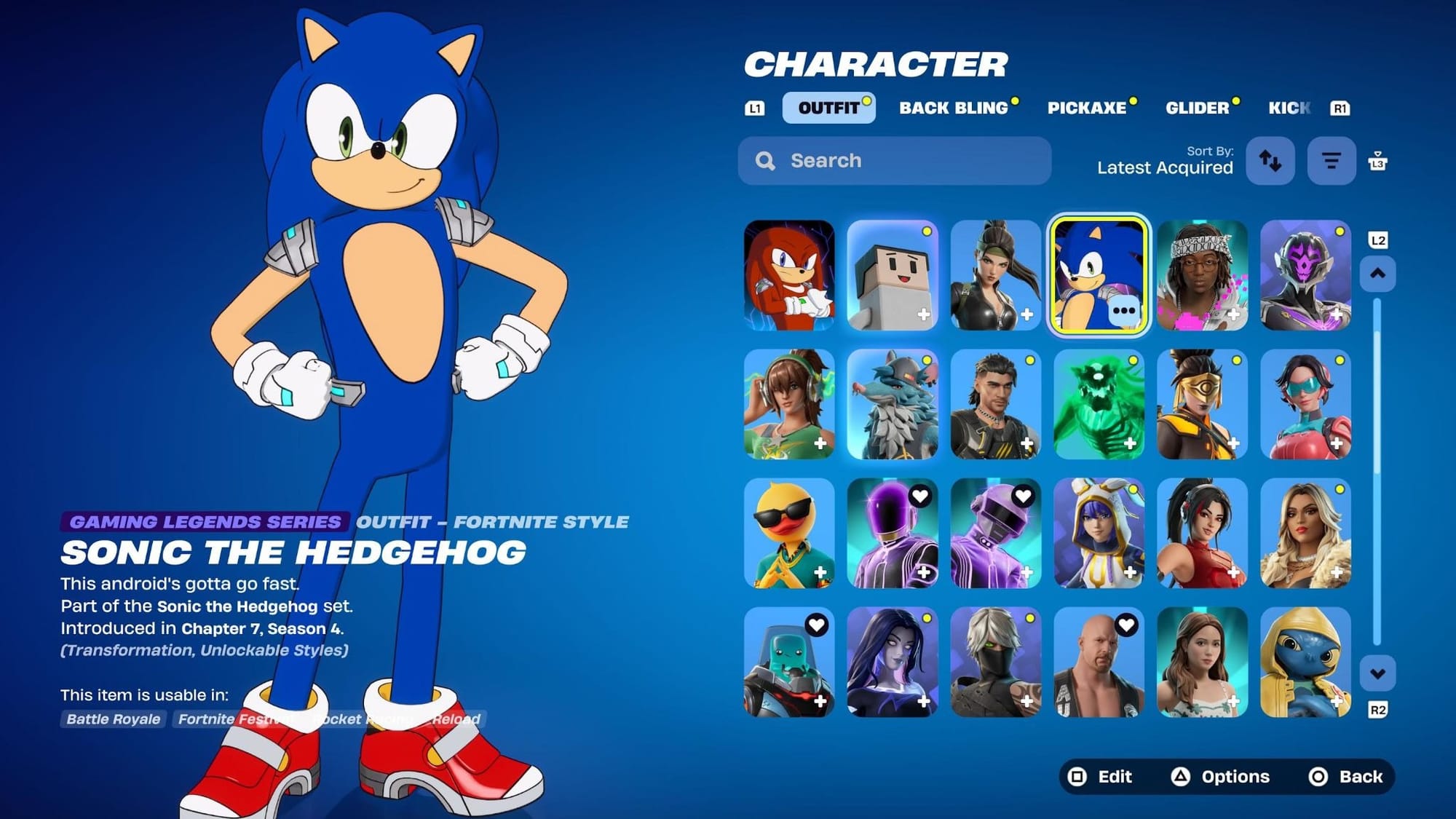
This dissonance is most notable in Fortnite's Sonic the Hedgehog collaboration. Once you get your Sonic skin, you’ll notice something… off. You’re not actually Sonic, or Knuckles, or Shadow.
All of the Sonic collaboration skins are canonically androids, created by Dr. Eggman and repurposed by Tails in a Fortnite X Sonic collaboration comic.This stands in contrast to Tails’ appearance as a sidekick character; Tails gets to appear as himself because the player is not able to control sidekicks, so Tails can always appear on-model and on-brand. That’s not the case for the Sonic, Knuckles, and Shadow skins, of course. In an interview with IGN, Sonic Team’s Takashi Iizuka said that the reason was that “Sonic will never hold a gun.” In essence, this deft bit of canon manipulation is an attempt for SEGA to have it both ways. The android move allows SEGA to participate in a lucrative collaboration event, but simultaneously attempt to prevent any damage to its characters’ images that would result from them doing out-of-character things like shooting guns. SEGA has plenty of experience with the damage that kind of thing can cause to a brand, after all.
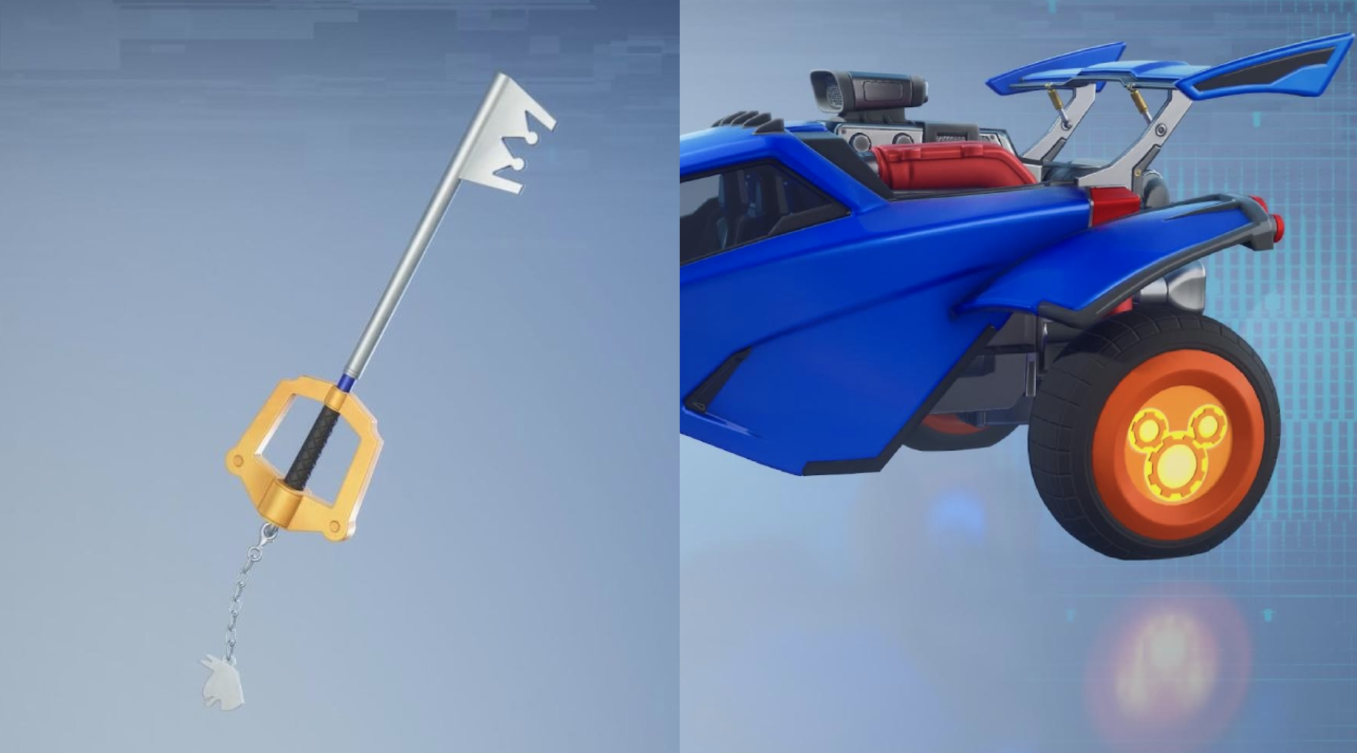
Likewise, you can zoom in on the Keyblade pickaxe skin and find that instead of that iconic Mickey Mouse charm dangling from the handle, there’s a Fortnite llama head instead. Despite Disney being okay with Hercules in the game, they and Square Enix appear to feel that having Mickey Mouse, or at least his logo, associated with this chaotic box of toys in this way is a, well, no-no, instead opting for a much less prominent placement in a design for vehicle wheels. (Aftermath reached out to Square Enix for more information, but did not hear back in time for publication.)
This could be why we have not seen any official Nintendo or Pokémon collaborations with Fortnite; these companies have an iron grip on their characters. They are notorious for shutting down free fan works, giving the Watterson-on-steroids justification that any non-official portrayal of these characters damages their identity. If that’s how they feel about fan games a couple thousand people play, it’s likely they feel even more strongly about their characters’ appearances in Fortnite, where they would necessarily be able to shoot guns, play songs, and perform every single emote ever added to the game, including the Stone Cold celebration where your character imitates the iconic turnbuckle beer chug.
As I wrote above, control over how characters are portrayed is integral to a company’s brand and how it is perceived. But in a game like Fortnite, players could essentially make those beloved characters do whatever they want in a public server of up to 100 people, through a near-endless combination of emotes, weapons, and voice chat. The value and potential damage a Fortnite collaboration can bring to a brand depends fully on the brand strategy of the collaborator involved. Nintendo, Nickelodeon, and Disney all have different brand considerations and strategies than Warframe and Borderlands do. If Wendy’s Twitter account and Denny’s Tumblr have taught us anything, it’s that there’s a lot to be gained from breaking through long-established brand restrictions and embracing chaos. But we’re a long way from the 2012 era of brands learning it’s okay to be horny on main. Hell, we’re a long way from the ritualistic killing and rebirth of Mr. Peanut. Seeing the Duolingo owl flirt with Dua Lipa doesn’t really read as clever or cute anymore, it reads as desperate. The same could be said for these Fortnite collaborations, especially in the case of more obscure collaborations like the newly added Screamer skin, Hiroshi Jackson. It was a great racing game, sure, but was anyone really asking for a Fortnite collaboration? Conversely, the Mega Man and Spyro collaborations seem purpose-built to spark a hype cycle for recently-announced games in their respective series.
If you care about these characters, if you care about the canon, either as a fan or as a marketer trying to find an audience, there’s a real drawback here. I love King of the Hill, but now, given my go-to Fortnite loadout, I’ll always kind of think of Hank as a Hatsune Miku fan who carries a magical girl scepter and wears Heelies. And as funny as it is, for me, it kind of sucks. The fourth wall has been shattered, and the character is being sold to me now as a literal skin, an empty shell for me to purchase and customize. The control no longer belongs to the people who gave birth to it, created its personality, and worked to make it iconic, it belongs to Epic, and is being used and sold specifically to get me to buy V-bucks. Something important dies in that process, no matter how much fun you’re having with your new toys. When these characters are hollowed out to become skins, it’s impossible not to think of that hollowed-out version whenever you see them outside of Fortnite as well. It’s the inevitable effect of having these characters sold back to you as, it must be said, an advertisement for something else–in this case, getting you onboarded into Fortnite and spending money.
It’s really striking to look back on those original Simpsons no-no sheets to view how seriously people took brand guidelines decades ago, whether they were animators, marketers, or brand managers. Nobody, whether their goal was to create art or market it, wanted to do anything that would make these characters less special and iconic, because the goal was for an audience to buy into the stories they were telling. Now, the goal is to sell our own nostalgia back to us at an inflated rate, warped and twisted and stripped of its original context and, indeed, meaning. After all, the entire Simpson family is playable in Fortnite.
Picture this: There’s some kind of argument in your neighborhood. Maybe a couple is in a shouting match in their apartment and you’re worried. Maybe someone thinks they’ve been swindled at the store. You put out the call to your local Bracer Guild, and a friendly adventurer shows up, does some mediation, and everything ends peacefully. Wouldn’t that be nice?
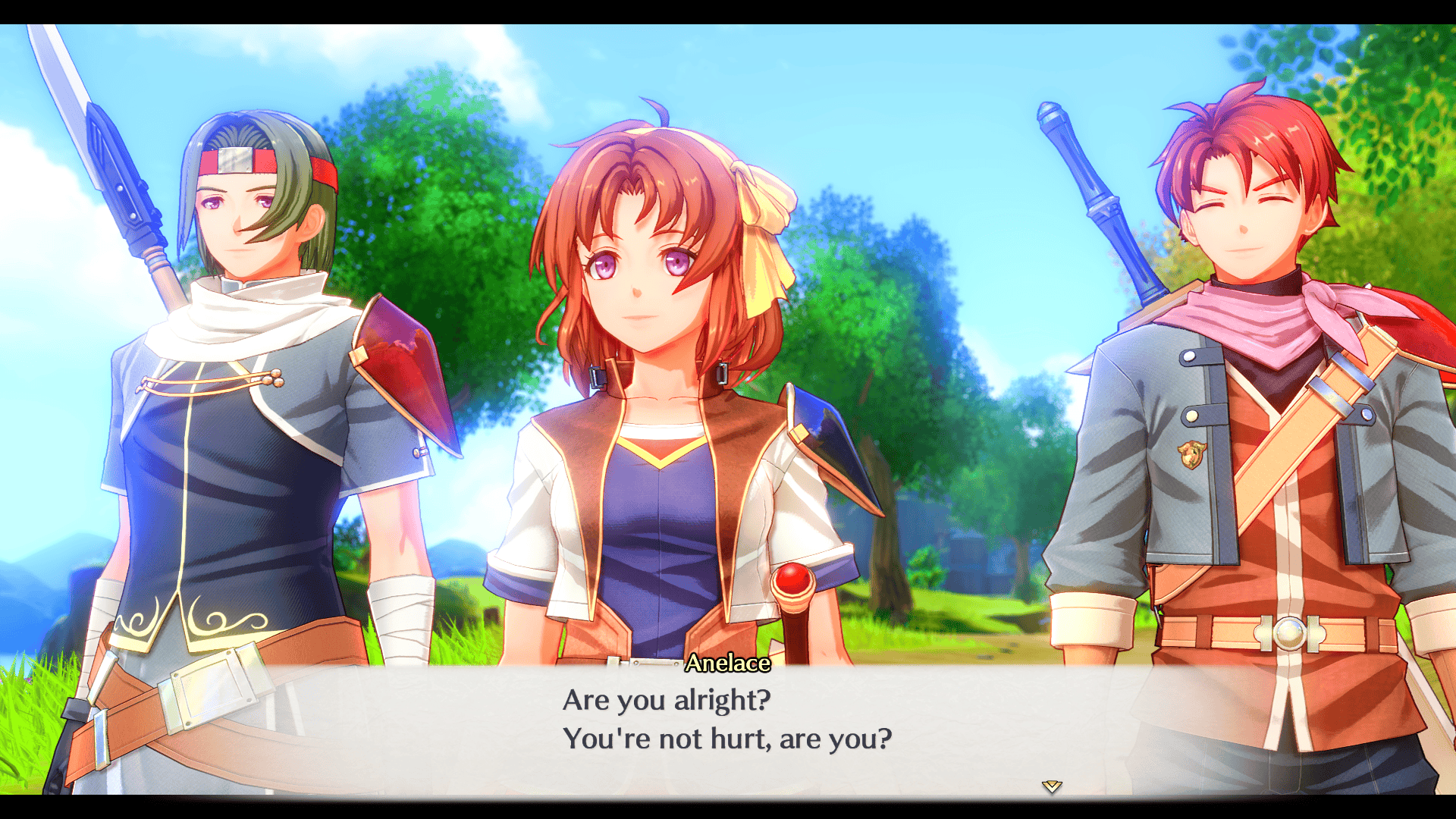
That’s the reality in certain parts of Zemuria, the continent where the long-running Trails series of role-playing games is set. These games kicked off in 2004 with Trails in the Sky, a story that focuses on young teens Estelle and Joshua Bright. They had just become bracers, handy adventurers who are a mix between monster hunters and community service workers. Bracers do anything from fighting evil villains and dealing with dangerous beasts all the way to delivering packages or teaching Sunday school. They’re not cops, but they still patrol around and help people with any job, no matter how small. It’s a deeply community-minded adventure style.
In the Trails games, players spend a lot of their time going on odd jobs and slowly unraveling a larger story. In-universe, about a decade has passed from Trails in the Sky to 2024’s Trails Beyond the Horizon. The draw of the series, beyond the decades of world-building, is both the relaxed adventuring and how it gives way to big anime action beats. Bracers are a major cornerstone of the setting, as Estelle and Joshua travel around their home country of Liberl doing all kinds of jobs. The joy of Trails comes from the wandering and the satisfaction of learning local customs and meeting new people. It’s a great time.
These games can be daunting to get into, so a pair of recent remakes of the first two (the latest, Trails in the Sky 2nd Chapter, releases on September 17th) are meant to help people get into the plot. Playing the newest remake, I was struck by how appealing the bracer life is. In real life, where police department budgets spike and communities have needed to band together to deal with immigration agents seizing neighbors, it’s easy to want a new kind of community servant. People who can approach a situation confidently and give the care that’s needed. No escalation.
Of course, we’ve been trying this here and there for a while now. We’ve not established Bracer Guilds, but somecities and counties in the United States are trying to rethink how to respond to community crises. In Eugene, Oregon, some amount of lower-risk mental health issues and homelessness situations have been tended to by crisis teams since 1989. In Austin, Texas it is possible to use 911 to specifically ask for mental health services over police. Bracers aren’t exactly the same as social workers or mobile crisis workers, but the ethos exists in our world.
Beyond this, we’ve seen communities come together to form civilian organizations and ad hoc teams. Most visibly, citizens in Minneapolis built a wider network of legal observers and watchmen laser focused to help protect vulnerable families from DHS immigration enforcement operations. They’ve riskedtheirsafety for their neighbors.
We’ve known that there’s better paths to protecting our communities for a long time. Sending social workers to work alongside police lowers arrest rates, and in many cases there’s no need to include the police at all when trained mediators are sent to handle neighborhood issues or mental health crises. It costs less money and literally lowers the crime rates of certain crimes if you send specialized care to meet specific incidents, and repeat offenses drop.
While playing Trails in the Sky 2nd Chapter, I kept thinking about what it means to send truly caring people to help with a local problem. I kept remembering late nights during the protests in 2020; on one march through Brooklyn we were cut off by police, and it went about as well as you might expect. I remember this girl who was with me and the panic attack she had after watching trained officers march on protestors. That’s one of many memories I have: people in the middle of grief, and cops who came and handcuffed them.
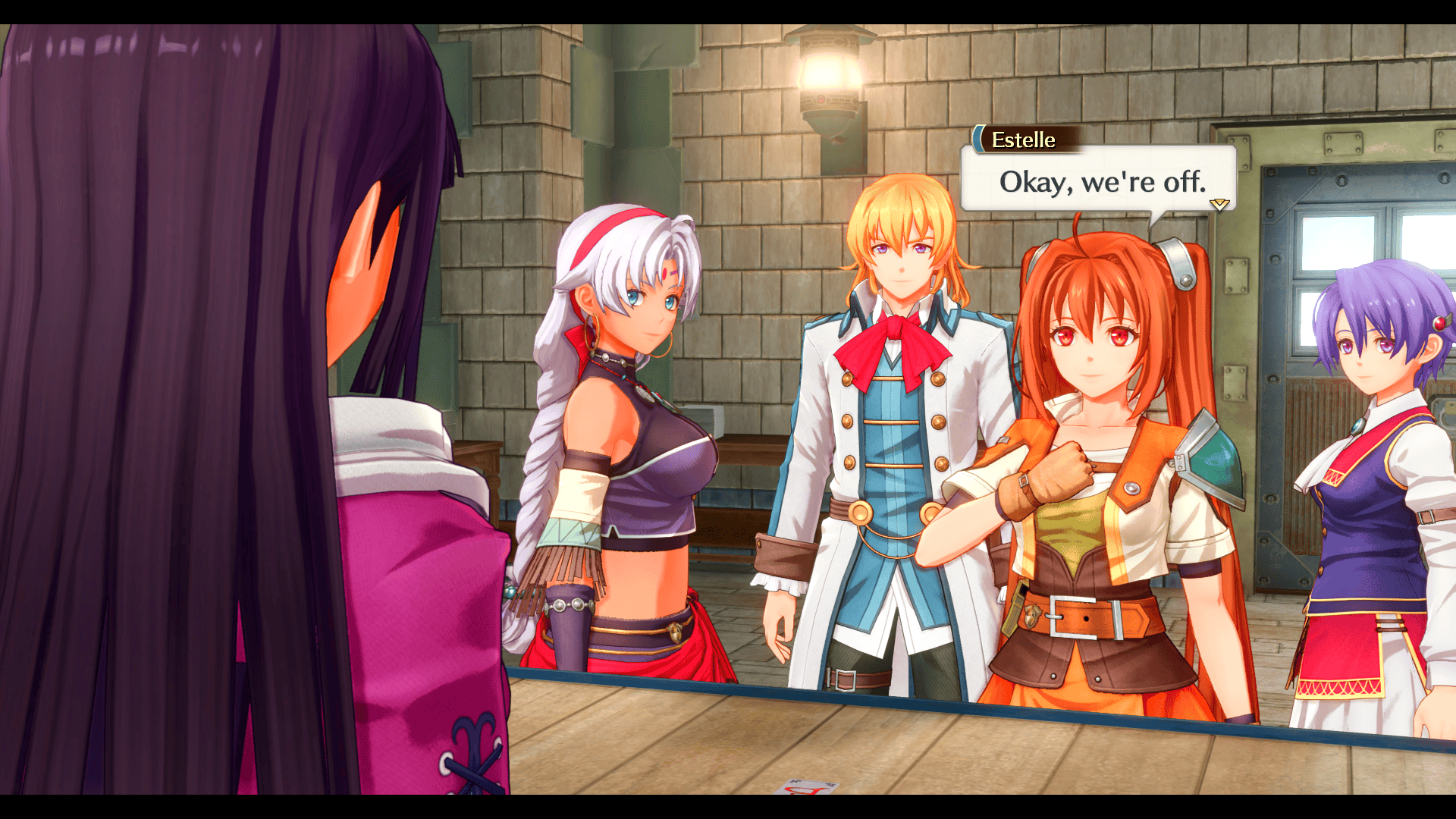
I wasn’t playing the game and having flashbacks or writing a leftist pamphlet, but I did look at Estelle and the other bracers and think, “Damn, wouldn’t that be nice?” I don’t know if I’d want monsters on the road between towns, but trained professionals who truly cared about their communities? Yeah, that seemed pretty damn good to me.
In pretty much every Trails game, most of your time is spent on side-questing and really getting to know everyone you meet. Dialogue for NPCs updates constantly and their own personal storylines are trackable. When it comes to quests, you might help a couple find a lost wedding ring, and then a few hours later—if you happen to stop by the church—you can see their wedding and hang around to watch the bouquet get tossed. These are games about learning every street corner; every hustler, salary man, school kid, and farmer has a story that you can learn. Take a few bracer jobs and you really start to know the community.
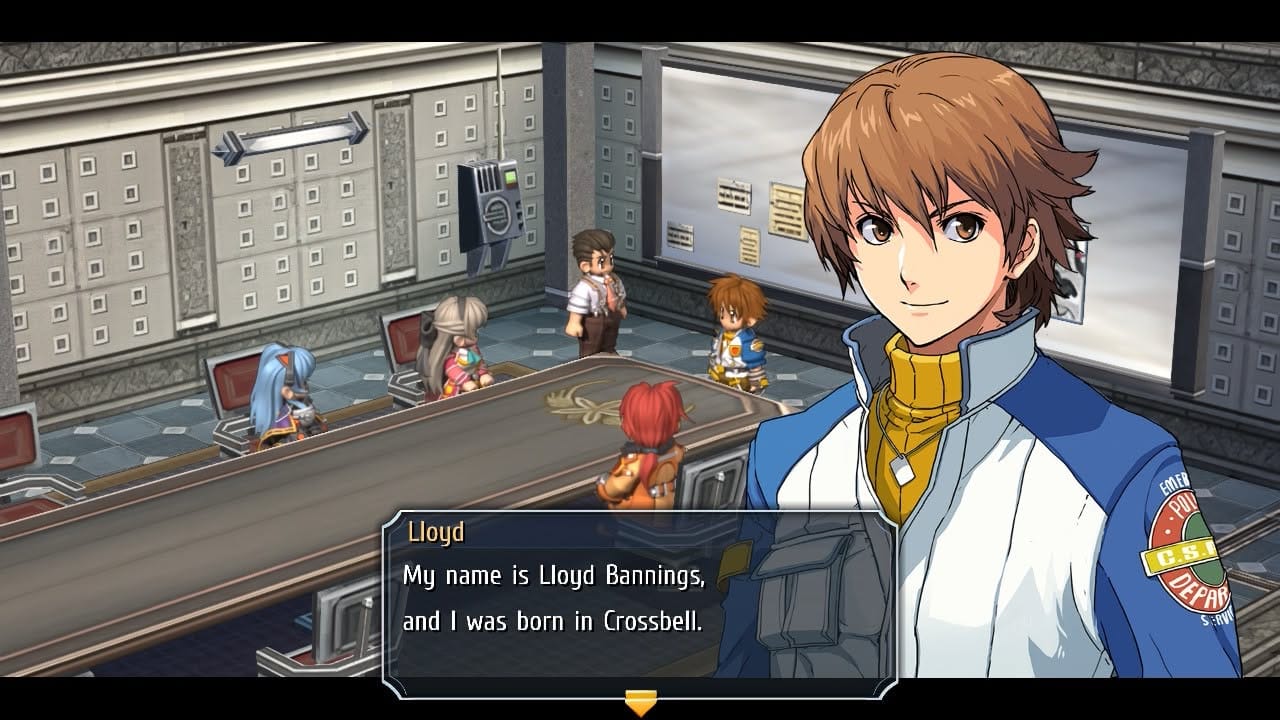
The Bracer Guild’s schtick is so effective that in the next story arc after the Trails in the Sky games, told in Trails from Zero and Trails to Azure and which take place in the metropolitan state of Crossbell, the police establish a department to follow the format. The new protagonist is Detective Lloyd Bannings. As a member of the Special Support Section, he and his comrades adopt a new brand of police work. The result, alongside their ability to unravel a secret cultist plot, is a police department that’s able to really respond to what people need. Sometimes, the SSS is conducting proper criminal investigations or helping with event security. In other instances, Lloyd and his team are filling in for mascot performers at the local theme park or helping to rebuild some storefronts in the ramshackle downtown district. There might be a lost kitten to find or a charity event to help manage. Traditional police work is mixed with community service. Through their combined community outreach and highly personal problem solving, they help transform Crossbell for the better.
I’ve spent basically a decade working in games, either writing about them as a journalist or working at a studio. I do my best to take games very seriously, but they are “just” games. I’m not going to walk into a local budget board meeting with the Bracer Guild charter and convince anyone to start a radical new first responder initiative. No one who disagrees with my position that police agencies should be defunded will see my side if I load up a copy of Trails to Azure. That’s not how the world has ever worked.
That doesn’t mean art, including games, can’t inspire and provide models to follow. These days, it can be difficult to think anything you might do for others “matters” when the forces turning the world to shit are so powerful. Playing Trails in the Sky, you might look at Estelle defeating grand foes and participating in the plot’s larger events and think “I wish I could do that.” Who doesn’t want to save the mind-controlled dragon or defeat the seemingly undefeatable shadow society behind the world’s troubles? Maybe we can’t do that, but we still can be like Estelle.
You can be a bracer if you want. The one thing you have control over in this life is what you do for the people around you. Your family, your neighborhood, your town or city. There are gardens to help maintain, there are people to feed. There’s probably a library that needs someone to help with a book fair, or a class you can take to learn how to be an ICE observer. That’s bracer work! The Trails series has always understood that the big heroics aren’t the only thing that make a hero a hero. These are games where that portion of the plot sometimes doesn’t kick off for 50 to 60 hours or more. About 90 percent of Trails in the Sky is spent being a bracer and going town to town. The plot doesn’t fully arrive until literally the very last moment of the game.
History usually doesn’t resolve in one clean day of heroics. It’s a sequence, a progression. You plant the garden so that people can be fed, and that itself has contributed to the tyrant’s fall. So while video games don’t change the world, they’re not just idle flights of fancy either. Sometimes, a story is the thing that makes you realize that the world can be better.
It matters that Estelle Bright is a bracer. It will matter to Crossbell that Lloyd Bannings and the SSS take up a new kind of police work. If seeing that in a story, if spending 70 hours wandering Liberl on odd jobs gives you the good sense to volunteer somewhere or head off to a protest, that’s more than enough. You gotta get your inspiration somewhere.
Close the police departments. Open up some Bracer Guilds! We can’t have the clean magickal energy and the cool treasure hunting priests, but we could probably lift the guilds from Zemuria. If anything else, it’s nice to imagine a version of things that is more personal, even-handed, and really focused on community needs. If that’s not doable on a “real” level, then we can at least do it on a personal one. Games don’t change the world. But! Estelle Brights can change the world, and the good news is that you can easily become the next Estelle Bright if you really want.
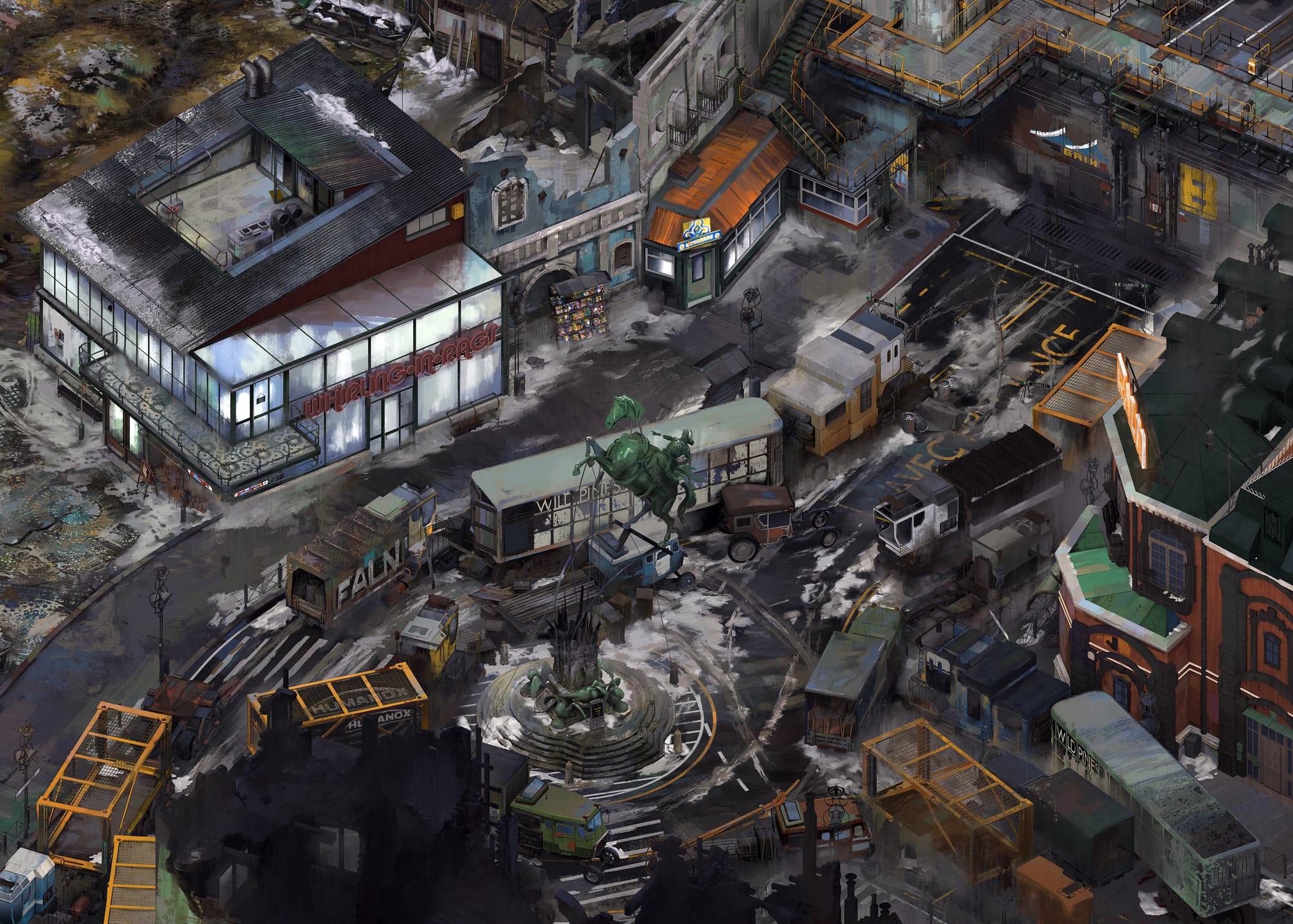
When Harry first steps out of the Whirling-in-Rags onto the Rue de Saint-Ghislaine in Martinaise, a cornet rings out, reverberating off of the cobblestones and incomplete murals calling the masses to revolution. Martinaise is an impoverished borough of Revachol, itself once a great city of the world. Now it is subjugated by the Coalition of Nations, under the auspices of the transnational Moralist International. The song that plays is titled “Instrument of Surrender,” referring to the so named treaty of unconditional surrender that the MoralIntern forced Revachol to sign. The “instrument” in question is both musical and diplomatic; the Instrument heralded the end of the Revacholian Commune forty-some years prior, while a song by the same name now soundtracks its dismal aftermath. But Disco Elysium is more than a sad game, and “Instrument of Surrender” is more than a sad song. In each, the undercurrents of optimism are the key message.
While Disco Elysium is most often noted and quoted for the sad-funniness of its setting and dialogue, it's the possibility for hope which provides the plot with its momentum; melancholia without hope is just wallowing, which is where we find Harry but not where we leave him. It is this heady combination which gives me great empathy for Harry. His world is mine, his struggles are mine, his disappointments are mine. His triumphs, too, are mine. Disco Elysium’s soundtrack stirs within me a unique emotional reaction: an appreciation for all the things of my life in spite of its disappointments. Two tracks in particular are key to unlocking the emotional beats of Harry’s story, and especially move me: “Instrument of Surrender” and “Detective Arriving on the Scene.”
“Instrument of Surrender” is one of the most evocative songs on the Disco Elysium soundtrack. It emotionally and sonically grounds the rest of the soundtrack with the melodies and motifs it introduces. It also has a storied history within Sea Power’s discography. It is an echo of an echo: elements of “Cleaning Out the Rooms” from the band’s 2010 EP Zeus (and the album Valhalla Dancehall the following year) were incorporated into “Red Rock Riviera” in 2012 as part of the soundtrack for the documentary From the Sea to the Land Beyond, then reworked again for Disco Elysium in collaboration with Robert Kurvitz, who approached Sea Power about scoring the game with a number of tracks already in mind.
“Instrument of Surrender” seems like it should be a straightforward dirge for the Revacholian revolution, but its staying power derives from being more than a sad song. It is more spare than its higher-energy forebears but remains in a major key, which is associated with a more optimistic feel. The viola motif which leads “Cleaning Out the Rooms” enters at 2:00[1] and takes center stage for a minute before giving way to a more upbeat cornet sequence than the opening melody. While the viola lends “Cleaning Out the Rooms” its forlornness, in “Instrument for Surrender” it seems more wistful in contrast to the lonesome cornet. It comes to possess the energy of possibility, reinforced by the song’s rising energy from 3:45 onward.
The surrender in the song title is also Harry’s, for when it first plays he is at his lowest point. The Instrument handed Revachol over to a centrist invader whose moralist equivocating has left it in stasis, while Harry is similarly paralyzed. Yet it plays when he steps onto Martinaise’s streets for the first time, dazed but roused nevertheless, with potential opening up before him. The rendition in the game itself is quite different from the official soundtrack — longer and more ambient, with the positivity of the OST version’s back half woven in more ethereally. It is a music cue that I have found to be personally stupefying: it stopped me in my tracks during multiple failed attempts to play through Disco Elysium, overwhelming me with emotion and halting my progress.
Like the music, much of the world of Disco Elysium redirects to Harry’s interiority. Occupied Revachol is as much an externalization of Harry’s inland empire of self as it is the world which acts upon him. Yet, while Harry reclaims some ability to self-actualize over the course of his story, Revachol is a static backdrop. If Harry internalizes the Kingdom of Conscience thought, he’s greeted with one of the game’s most excoriating quotes, which reads in part:
Centrism isn't change -- not even incremental change. It is control. Over yourself and the world. Exercise it. Look up at the sky, at the dark shapes of Coalition airships hanging there. Ask yourself: is there something sinister in moralism? And then answer: no. God is in his heaven. Everything is normal on Earth.
Adopting the other political alignments — communism, ultraliberalism, and fascism — produces tongue-in-cheek quotes which are satirical in their glibness. “You can’t make an omelette without breaking a few million eggs!” declares your inner mind upon internalizing communist ideology, neatly summarizing the justifications for real purges and famines. On the other hand, the Kingdom of Conscience quote’s self-seriousness conveys an even deeper level of frustration with centrism’s preference to maintain the status quo[2]. The MoralIntern’s authority over Harry is suffused throughout the story; occupier of his homeland, employer by proxy. The Revachol Citizen’s Militia from which he derives purpose exists only by the MoralIntern’s good graces. True to form, none of this can be changed throughout the plot. It serves as the basis for the melancholia of Revachol as a setting, a once-great city laid low, eulogized by songs like “Instrument of Surrender.” By finally doing his damn job, Harry becomes dynamic against the world’s stasis, and against his own. Disco Elysium does not yearn for the dictatorship of the proletariat. Yet, there is a sense of loss for a fictional world which predates the bombed-out one players are greeted with — both the exterior world and Harry’s interior world. Because the storytelling is intensely focused on the latter, it naturally produces space for the player’s introspection into their own interior lives. It was this invitation to consider what felt stuck or missing in my own life that provoked a powerful emotional reaction within me.
If "Instrument of Surrender" is about a moment of complete collapse, “Detective Arriving on the Scene” is its mirrored twin. It more resolutely delivers the optimism which previously was only tentative. It plays at the same location, the Rue de Saint-Ghislaine, but in the evening. The player is therefore likely to hear it for the first time at the end of their first day piloting Harry around. Among the many embarrassments of that first day, they also will have made some small progress that feels like the beginning of lifting a titanic weight, and the song’s interpretation of motifs introduced by “Instrument of Surrender” reflects this. It features the same viola melody, again at 2:00, but the cornet is triumphant. The track title comes from one of the final conversations in the game: Harry’s encounter with the Insulindian Phasmid, a manifestation of hope and wonder, during the culminating moment of his own redemption. Recontextualizing the melodies of “Instrument of Surrender” offers an early glimmer of something more nuanced than uninterrupted melancholy. When I first heard “Detective Arriving on the Scene,” it meant I had broken through my previous stagnancy. It provided the propulsion necessary to eventually reach the Phasmid myself. This personal triumph would have meant less if not for the struggle which preceded it.
As these two songs are more than their initial melancholy, Disco Elysium is more than a sad game. When it was released, it felt like something novel in a world where the machinery of culture no longer itself creates culture, but follows, adapts, and reuses social media trends. This gave Disco Elysium the sharp edge necessary to wedge itself in the collective psyche such that we seem to be always returning to it, searching for meaning. “Capital has the ability to subsume all critiques into itself,” observes Joyce Messier, one of the narrative’s representations of the MoralIntern. “Even those who would critique capital end up reinforcing it instead.” There is an inherent irony that Kim’s bomber jacket, a symbol of a fictional revolution, is now productized in the real world. We admire what shines briefly on its own before being assimilated. Culture, like a coral reef, is composed of skeletons that hint at a different way of being. The subsequent dramatic departure of key figures from ZA/UM only adds to Disco Elysium’s mystique as the singular product of that era of the studio. Fraught though it was, ZA/UM momentarily stood against the static perpetual recycling of culture and produced something new and interesting enough that it is now emulated by other games hoping to capture some of its magic. It was a small rebellion, the way Harry dared to change and become better in an unchanging world.
There is a certain painful familiarity in recognizing all the flaws and missed opportunities of our world in a fictional one, but with that recognition comes catharsis. It’s not quite nostalgia, but the German word sehnsucht comes close: imagining an ideal life in an imperfect world. It took me five years to roll Disco Elysium’s end credits after many attempts, and only thanks to my wife co-playing with me. The game enraptured me, but the feeling of playing was that of having my own faults and insecurities dug out from my guts and shown to me. When my friends joked that Disco Elysium was so uniquely me-coded that there was no way I couldn’t have played it, they touched on a truth so true it was paralytic. Like Revachol, like Harry, like “Instrument of Surrender,” I became stuck, unable to traverse the Rue de Saint-Ghislaine and move the plot forward. The experience of playing alongside another person was like swimming where before I had sunk. Adapting to my wife’s approach to play diverted my inclination to spin out in the face of the game’s grandiosity. Mikee Goodman’s Ancient Reptilian Brain had us crying tears of laughter by the time Harry was re-entering consciousness, and together we guided his hungover body through the Whirling-in-Rags, out the door, and beyond.
I’ve completed Disco Elysium once, and as impactful as it was I have no desire to play through it again. However, I now listen to its soundtrack regularly. When I listen to Disco Elysium’s music, I am prodding a psychic bruise experimentally, to see what memories fall out from that liminal space that banishes sleep at 3 a.m. Times and places that cannot be revisited, alternate paths that cannot be walked. Loading a minivan with film cameras and driving into the snowy Michigan night to photograph stars and gun stores. Throwing a book across my room in frustration while a concerned friend checked on me, as I knew I was going to fail all my classes and move home while everyone else started their post-college lives in Chicago. Planning a move to Europe that was doomed to be waylaid by the pandemic. Happenstance medical tests which uncovered a life-changing diagnosis. I cope by losing myself in media and while Disco Elysium wasn’t one of those anaesthetics, when I look into its world and hear its music I can see my face beneath the surface of brackish water lapping against Revacholian docks, fighting to stay afloat. The surrender in “Instrument of Surrender” is also mine. I also feel the hope that allows me to persevere.
This admittedly embarrasses me. I am embarrassed that I look upon these times with a masochistic self-indulgence. I am embarrassed that, fifteen years after being transformed by Kieron Gillen’s “The New Games Journalism,” I still default to the prism of myself as the lens for critically analyzing a game, as if there should be an as-yet unobtained way of thinking unique to me. I am embarrassed by the visceral swell of my own emotions, but cannot help that the music of Disco Elysium has wedged itself into a spot in my brain that feels built to house it. In “The New Games Journalism, Same As The Old Games Journalism,” Gita Jackson reflects on games as “emotional experiences that radiate outward into the rest of my life.” (They also mention their “inherent dislike of personal essays about Disco Elysium” which I think is very funny and very fair.) Through its music, I return to my own emotional experience of Disco Elysium again and again, seeking comfort in the familiarity of Harry’s pain — and in turn my own. There is an existential pain in knowing we are fated to live an imperfect existence, and that there will be mistakes that cannot be undone. It is this impossibility that we long for in sehnsucht. Disco Elysium will let you quickload and reroll until you pass every check, but all of Harry’s worst mistakes have already been committed by the time you meet him.
Sehnsucht or not, I would not trade this life for anything, mistakes and all, because now I have a child that has crystallized this life’s meaning. Some mornings I put on a Sea Power song for us — sometimes “Instrument of Surrender,” sometimes something else — and let a deep appreciation for an imperfect life, lived nevertheless, surge over me.
You press play and let the music wash over you. A mental surfactant, it gently abrades and carries away the rougher edges of your present consciousness. You watch your daughter twist and spin along with the opening tones. You already miss this moment in anticipation of its passing, and all the future moments in anticipation of their arrival. What thoughts and feelings will she have when she is as old as you are now? What will capture her, the way this song does to you? You leave the song behind as you step outside together, now alone but for birdsong. Look up at the blue sky. It is already hot in this city, too hot to sustain a Revacholian drizzle. This is a land of thunderstorms, sudden and torrential. Her tiny hand holds tight to yours. She needs you (for now). You can keep her on this earth. Be vigilant. You love her. She makes everything worth it.
Timestamps throughout will correspond to the official Disco Elysium soundtrack release. ↩︎
I cannot help but see how Estonia’s place in the post-Soviet regime has influenced Disco Elysium’s perspective. It has the advantage of distance from Soviet hegemony which it does not have from the largest centrist influence on Estonian self-determination, the European Union. ↩︎
There’s been a lot of ink spilled over Dark Souls 2. It’s not necessarily a beloved game – especially compared to its immediate predecessor, the original Dark Souls, which made such an impact that subsequent titles would inevitably be criticised for varying from the formula. For example, one of the great things about Dark Souls is the interconnected world. You could see places in the distance and travel across to them, and levels often connected into each other in unexpected ways. It’s a knotty game: you follow a strand, looping over and round, and find yourself somewhere unexpectedly familiar. That’s arguably the quintessential Dark Souls experience – emerging out of a tunnel after crawling through some fuckass nightmare sewer and going – oh, I know where this is. Dark Souls 2, by comparison, has a sprawling level design. There are four or so major paths leading away from the main hub, and you have to follow each path to its end. The final boss at the end of each path has a special one-way bonfire that teleports you back to the main hub, as if to say – all done here chief, tick it off. The knotty interconnection of Dark Souls is weird and potent, and it feels like a loss moving to the hub-and-spoke corridor model of Dark Souls 2. It feels like the game has discarded something to no real benefit. I used to think that it made Dark Souls 2 a lesser game – but now I see it as in line with a broader aesthetic shift that characterises the second game.
Dark Souls and Dark Souls 2 have very different aesthetic energy. Dark Souls 2 is so noticeably different as to feel slightly alien. Dark Souls is a gritty fantasy: it’s a grimy, grainy title, partly through its visual design, but also just through its general aesthetic sensibility. Dark Souls is a game about tragic nobility. It’s sad. You have the titanite demons, unholy stone creatures that are missing a leg, that limp about using their staff as a crutch. They’re still powerful enough to absolutely rock your shit, but they’re wounded half-creatures. The Gaping Dragon is a mutated freak, a previously noble dragon eaten away by rot and corruption, with a second gaping mouth running the length of its torso. Many enemies are characterised by that combination of the noble and the tragic. The giant wolf Sif guards the tomb of her master Artorias, and only really fights you to protect the grave. As you wear her down, she starts noticeably limping. Dark Souls is a game about the slow erosion of dignity. When Oscar sends you on your quest at the start of the game, he tells you “I’ll die soon, then lose my sanity.” He knows what’s coming, and he faces it. It’s a game about a world besmirched. Dark Souls 2, on the other hand, is a game about forgetfulness. Its concern is more immediately about an interior psychological state. It’s softer, more intimate – less about empires and more about minds. In the Forest of Fallen Giants, soldiers hack at the corpses of their enemies, which have taken root in the ground and grown into trees. The soldiers don’t remember much, but they remember the war against the giants: their witless assault on a bunch of dead bodies is the last vestige of who they used to be. Several characters struggle to remember why they came to Drangleic. In the Black Gulch, Lucatiel finds herself slipping away: “My thoughts… are very… scattered.” She reflects on losing her mind – not going insane, but becoming forgetful. “Loss frightens me no end. Loss of memory, loss of self.” Other characters have less self-awareness, but experience the same process. When the stone trader Chloanne travels to the hub area Majula, she only faintly recognises her father working at the forge: “He sort of looks like my father.” Dark Souls is about fading grandeur, the fading of the fire, and Dark Souls 2 is about forgetfulness. They’re both about a world slipping away, but the first game is concerned with the external appearance of that world, and the second with an interior psychological state.
– The difference between the two is most obvious in areas where they’re similar. One of the visually brighter areas in Dark Souls is Anor Londo, home of the sun god Gwyn. On arrival, the player sees the sun’s rays piercing through the gathering clouds. Majula, the hub region in Dark Souls 2, has a similar vista on arrival. The sun spreads across the water, and the region is flooded with low, yellow light. These two visions highlight the design philosophies underpinning each game. In Dark Souls, the light is powerful but obscured. It has force and presence, but the gathering clouds block its rays from reaching the earth. It is increasingly cut off: metaphorically, the grandeur of the sun is fading. In Dark Souls 2, the sun sets. It’s not opposed or obscured, it’s slipping away. It’s natural, just the turn of the earth – and in some sense cyclic, hinting at the beginning of something new. The two different treatments highlight the different philosophies. Dark Souls is overcast and Dark Souls 2 is about sunset. In that sense, Dark Souls 2 is also about a final burst of colour. As the sun falls, the world is at its brightest, as alluded in the description for the Old Knight armour: “Sometimes, just as a thing falls to pieces, it unleashes its last flash of great power.” Dark Souls 2 takes that flash as part of its visual grammar. It’s interested in the play of light, in shocking sweeps of colour. It’s often beautiful. Majula is set against the golden light of sunset over the waves. Heide’s Tower of Flame has deep blue skies, dripping with stars – blue like the ocean, the sort of sky you’d expect to see in Elden Ring. Colour in Dark Souls 1 is often grainy and mottled. Its favourite texture is damp brick. Dark Souls 3 has a muted palette and baroque design – it’s detailed but not particularly colourful – and the urban Victorian setting of Bloodborne is all fog and alleyways. Dark Souls 2 has the broader colour palette. Several areas have very clear colour unity. There’s the poisonous lime green of Earthen Peak, the red glow of the Iron Keep, the white mist of the Shaded Woods, and the blue-black rain and iron of Drangleic Castle’s exterior. The colour schemes of areas like the Cerulean Coast in Elden Ring can be traced back to the aesthetic of Dark Souls 2 – which, for all that its title implies, is not a very dark game. Its aesthetic is cheery and bright. It’s a gentle game about beauty and forgetting, reflected in the joyful, explosive spray of colour across its world.
Elden Ring’s Cerulean Coast
It’s understandable to feel like Dark Souls 2 is a downgrade from the original Dark Souls. Some parts, compared directly across, feel weaker. In Dark Souls, in the boss fight against the fiery Ceaseless Discharge, you can lure him into getting his hand stuck and then kill him in a couple of hits. In Dark Souls 2, a similar fight against the Old Iron King has him slam his fists down on the ground and then just sort of sit there, giving you time to attack. Ceaseless Discharge has a clear narrative explanation for his exposed defenselessness – he gets his hand stuck. The long window of attack with the Old Iron King feels clunky and inexplicable. He just sits there for so long. The similar form of the two fights – both against enormous fire monsters – makes the negative comparison difficult to avoid. So too the straightforward hub-and-spoke level design might feel like a downgrade from the interconnected world of Dark Souls. It certainly feels softer – not as in easier, necessarily, but somehow more gentle. The world design of Dark Souls feels tense and crowded. It’s a knotty, gnarled little ball of a world. Dark Souls 2 is more relaxed – in keeping with its aesthetic of forgetfulness. It’s not so tightly wound. It sprawls and runs on. Dark Souls is arguably the more complex achievement, but the level design of Dark Souls 2 feels appropriate to its soft, wistful beauty.
These days, I find there is a temptation among certain types of people to only ascribe worth to games that have “something to say”, usually in a narrative sense. It wasn’t always this way — and it doesn’t have to be this way!
While I was away on holiday last week, I played through all of Super Mario Galaxy, a game that I’ve been meaning to get to for the longest time, but which I’ve never really made time for — at least partly because I am not immune to the above. I quite often find myself thinking that story-centric games are somehow more “valuable” than games which focus on their mechanics or the simple act of play.
Sitting down and properly spending some time with Super Mario Galaxy reminded me that gaming is a rich, broad and diverse medium, however — and sometimes exactly what you need is a game that might not have much to “say” in terms of narrative, themes and characterisation, but which nonetheless provides a rewarding, memorable and fully engaging experience. Let’s talk about that after the jump.
Super Mario Galaxy was first released in 2007 for Nintendo Wii — a platform that kind of exemplifies the issue we’re talking about here. It quickly gained rave reviews and remains extremely fondly regarded to this day, but until its 2020 reissue as part of the limited-print Super Mario 3D All-Stars for Nintendo Switch, and its subsequent re-reissue (again for Switch) alongside its sequel in 2025, it had been regarded as somewhat trapped on its original platform: a dated console with a control scheme perceived as gimmicky by many, and standard-definition visuals.
The Switch version of Super Mario Galaxy brings the whole thing into high-definition (including up to 4K resolution if you’re playing on a Switch 2) but otherwise doesn’t make too many changes to the original formula; it even maintains the original release’s pointer-based controls, though given that Switch controllers lack the IR pointer hardware that the Wii Remote used, this is implemented instead through gyroscopic controls that can be recalibrated at the touch of a button. (Those allergic to waggle will be pleased to note, however, that most of the things that can be accomplished with motion controls or the pointer can also be handled with directional and button inputs, with the only exception being hoovering up the collectible Star Bits with the pointer cursor.)
In Super Mario Galaxy, Bowser has kidnapped Princess Peach yet again, this time dragging her entire castle to the centre of the universe, where he hopes to use the Power Stars and Grand Stars to rule a cosmos-spanning empire. Mario, who rather optimistically pursues the villain and his fancypiece into space, finds his initial efforts thwarted, but before long comes into contact with the race of spacefaring “Luma” creatures and their “mama”, Rosalina. They take him aboard their Comet Observatory, and from there, Mario begins a galaxy-hopping adventure to, as usual, give Bowser a good kicking and get Peach back in time for afternoon tea.
As overarching plots go, it’s business as usual for the Super Mario series, though there is an optional “storybook” you gradually unlock as you progress through the game which tells an oddly heartfelt and surprisingly moving story about Rosalina’s origins. None of it really matters, though, because a Super Mario game is not about enjoying an ongoing story; it is about clearing a bunch of increasingly tricky courses, dealing with a range of obstacles of gradually escalating fiendishness, collecting a bunch of doohickeys and finally beating Bowser.
Indeed, outside of the storybook sequences, which are completely optional to engage with, after the introductory sequence, Super Mario Galaxy’s narrative component completely gets out of the way for you, and it’s right into the meat of the game: discovering new “galaxies” using the Comet Observatory, completing various objectives on them to earn Power Stars, using Power Stars to unlock new galaxies and areas of the Observatory (which in turn can find more galaxies) and, at various intervals, stomping Bowser and his son into the next “world”.
Structurally, Super Mario Galaxy has a fair amount in common with Super Mario 64, with each “galaxy” acting in a similar fashion to the various stages in that game. Multiple Power Stars are available in most galaxies, and before entering a galaxy you are invited to choose a particular star to tackle, with new stars unlocking as previous ones are attained. As you progress through the game, you’ll also encounter Hidden Stars by taking alternative routes or completing optional challenges, and special “Comet Stars” become available to challenge at various intervals, giving specific missions to take on in each stage. We’ll come back to those.
Super Mario Galaxy’s main gimmick is the fact that its stages aren’t flat. Many of them feature spherical or cylindrical elements, allowing Mario to run right around them onto their “underside”. This is in keeping with the “space” theme, but honestly it’s one of my least favourite aspects of Super Mario Galaxy; it’s during these sequences that the controls are most likely to cause issues, with a particularly persistent and annoying problem being that, under certain circumstances, holding a direction steady will sometimes cause Mario to inexplicably run around in circles.
At other times it can be unclear which direction you need to press to go “into” or “out of” the screen, especially when Mario is upside-down, and in later stages, where you need to be doing this while completing particularly difficult dexterity challenges, it’s not ideal. It’s also inconsistent as to whether or not it will flip the camera around to show Mario right-side up when you go “underneath” something; the very first galaxy you explore sets the expectation that this will always happen, but… well, it very much doesn’t.
Thankfully, the entire game isn’t based around these sequences; many stages are what many would consider to be much more conventional “3D Mario” stages: little worlds to explore, where finding the route forward is your main objective. In some respects, it’s a little sad that Super Mario Galaxy is arguably at its best when it’s being the most conventional, but those conventions did become conventions for a reason, after all. And Super Mario Galaxy does at least add some interesting new ideas to these sequences, too.
The first new power-up you’ll encounter is the Bee Mushroom, which allows Mario to transform into a bee. While in bee form, he is much lighter, so can stand on platforms that would otherwise give way beneath him, such as flowers and clouds. He can also fly for a limited period, allowing him to reach places that simple jumps cannot. When I say “limited” I mean it, though; you’ll be making short hops as a bee rather than long-haul flights, meaning you’ll still need to plan your route carefully. It’s a well-implemented and flexible transformation that is used effectively in a number of different galaxies.
Later in the game, you’ll encounter the Spring Mushroom, which, as the name suggests, causes Mario to get coiled up in a spring. While Bee Mario is a delight, Spring Mario is an obscenity. Mario doesn’t run or jump normally while in Spring form; he bounces around, making him difficult to control and move with precision and literally impossible to stand still. Even with the controls fully centred, Spring Mario will move around, making it very difficult to line up jumps or position yourself accurately. Thankfully there are relatively few sequences that involve both Spring Mario and particularly precision platforming, but the few that are there were a real lowlight of the entire game for me. I sincerely hope I never have to see Spring Mario ever again.
Elsewhere, you’ll encounter Fire and Ice Flowers, and these are implemented a little differently to in other Super Mario games. Rather than being a permanent power-up you hold on to until you take a hit, they are both timed, and are both primarily used for solving puzzles rather than combat.
Fire Mario can, of course, shoot fireballs, which can defeat enemies, but their primary function is to light torches that function as switches in some galaxies.
Ice Mario, meanwhile, is able to create icy platforms when he walks on water, and he can also “skate” at a higher speed than normal when moving over water or ice. Most of the Ice Mario sequences involve quickly getting from the power-up’s location to a relatively distant destination using the ice platforms to traverse otherwise impassable obstacles; there’s often some tricky and quite precise platforming involved during these sections, and two specific instances in the game require the rather difficult “triple jump” technique to be performed with perfect timing and accurate positioning.
There’s a lot going on in Super Mario Galaxy, then, but in true Nintendo tradition, it never becomes overwhelming. The controls never use more than three buttons — one for jumping, one for attacking and performing actions, one for crouching — and each Power Star in each galaxy focuses on just one particular type of stage gimmick at a time. Like many other Nintendo games, there are certain obstacle types you’ll see a grand total of once in the entire game — but during the stage in which they appear, you’ll be taken through an opportunity to experiment with them in a relatively safe environment, then presented with increasingly challenging circumstances in which to demonstrate your mastery of them. After that, you might not ever see them again — particularly if you focus on the game’s critical path rather than attempting to attain 100% completion.
I found it interesting that you can technically “finish” Super Mario Galaxy at pretty much its halfway point, with 60 of its total 120 Power Stars collected. At that point, you are able to unlock the final encounter with Bowser, and completing that causes the credits to roll. Some players will be perfectly happy with calling that “beating the game” and moving on — and that’s fine. Making half of the game’s challenges optional means that those who find themselves struggling with some of the trickier moments can set a particular objective aside and try something else.
Given that, on the grand scale of Super Mario games, Super Mario Galaxy tends to veer towards the more difficult end of proceedings, this is a good thing that keeps the game accessible without being patronising to anyone; those who want that stiffer challenge can go for all 120 Power Stars — and those who really want to push themselves can get all 120 Power Stars once with Mario, and then all over again with Luigi, who controls notably differently from his brother, as has been series tradition since both incarnations of Super Mario Bros. 2. There are, in fact, two bonus Power Stars you can only get during the “Grand Finale” celebratory stage that unlocks when both Mario and Luigi have attained 120 stars each — only the most dedicated players will attain these, but it is both rewarding for those who choose to pursue this goal, and for those who choose to tap out after just 60 stars in Mario’s playthrough.
The game’s relative lack of narrative contributes to this flexibility. Pursuing 120 stars instead of 60 doesn’t necessarily get you more “plot” (although there is a little bonus post-credits scene after attaining 120 and re-beating Bowser in the “finale”) but, for some, it will be a more rewarding gaming experience. Meanwhile, those who choose to tap out at 60 will have still played a “complete” game — and also have the option to come back to it at a later stage without feeling like they have to start all over again because they’ve “forgotten what had happened”, as can be the case with narrative-centric games.
It helps that a lot of the later Power Stars come from the aforementioned comets, which start showing up semi-randomly after you’ve made a certain amount of progress through the game. When a comet appears at a galaxy, visiting that galaxy forces you to take on the comet’s challenge, with a special Comet Star on offer if you beat it. And the comet challenges are all designed, in various ways, to test your mastery of various aspects of the game.
Comets come in various forms. Fast-Foe comets demand that you complete a tricky platforming sequence with enemies or obstacles that are moving more quickly than normal. Speedy comets challenge you to complete a particular Power Star’s objectives against a strict time limit, and sometimes with some subtle tweaks to the level (usually to make it a little easier and/or speedrun-friendly). Cosmic comets pit you in a foot race against a shadowy Mario who often cheats to get to the goal — though you are also free to do so, too. Daredevil comets task you with completing an objective — usually, though not always, defeating a boss — without taking any damage. And purple comets, which only appear after beating Bowser in the finale for the first time, demand that you collect 100 purple coins in a stage.
As you might expect for something which technically counts as “post-game”, the purple coin challenges are some of the most difficult in the entire game. Pleasingly, they take a variety of different forms, too. In some cases, collecting all 100 coins is just a matter of following a linear trail; in others, you’ll need to explore a stage thoroughly in order to track every last one of them down. In others still, you’ll be presented with a self-contained traversal challenge in which there are more coins than you need scattered around, but collecting 100 of them is very perilous indeed.
The most difficult of all the purple coin challenges involves scrambling around a pixel-art depiction of Mario constructed entirely of immediately fatal toxic goop and platforms that either permanently dissolve or start continuously tipping over the moment you step on them; the challenge here comes not only from surviving these relentless obstacles, but also from planning a route that will allow you to actually get back and retrieve the Power Star once it appears. Because, yes, of course it appears right back at the start of the stage, so you’d better hope you left a clear path back!
Super Mario Galaxy can be difficult, particularly during these optional late-game challenges, but it’s never unfair. Even its most frustrating, annoying sequences, such as the aforementioned purple coin scramble or anything involving Spring Mario, can be overcome with enough persistence, determination and the ability to stay calm under pressure.
But I also think one of the most worthwhile things about the game as a whole is that it doesn’t, in any way, make you feel like a “failure” if you decide to walk away from something that just proves to be too much for you. Not everyone will have fun attempting to accomplish the most difficult objectives, and Super Mario Galaxy never punishes you for deciding that enough is enough and just wanting to move on. Remember: you can beat the game after completing just half of all the objectives in one of the two playthroughs required to “100%” it, and you are not, in any way, a lesser player for choosing to be satisfied with that.
More than anything, Super Mario Galaxy just wants its players to have fun. It’s one of many great examples of Nintendo treating its games as a toybox rather than a tightly scripted, authored narrative experience. There is structure and there are objectives to complete — but the priority is not on ploughing your way through the whole thing in the hope of seeing “how it ends”. You know very well how it ends before you even begin — Mario beats Bowser and rescues Princess Peach, just like he always does. That doesn’t mean the journey isn’t worth taking — and for many years now, more than pretty much anyone else in the games industry, Nintendo understands that the journey can, itself, be the most rewarding thing about an experience you have chosen to spend your time interacting directly with.
Coming away from Super Mario Galaxy after playing it for the very first time in 2026, it’s not my all-time favourite Super Mario game — that honour still belongs to the incredible Super Mario 3D World— but I do understand why it is regarded so fondly to this day, and I had a great time with it. It is a game that understands that many of us pick up a controller so that we can play; a game that, in many ways, represents a side of the medium that can sometimes feel like is fading away somewhat. (It isn’t; you just need to know where to look.)
It was a fine game to play on my holiday — and yes, I did immediately make a start on Super Mario Galaxy 2 as soon as I’d bagged 120 stars and rolled credits for the second time. More on that another time, though…
Did you know you can subscribe to MoeGamer as a newsletter and get new posts delivered right to you? Just pop your email address in below and subscribe for free. Your address will not be used for anything else.
 Log in